


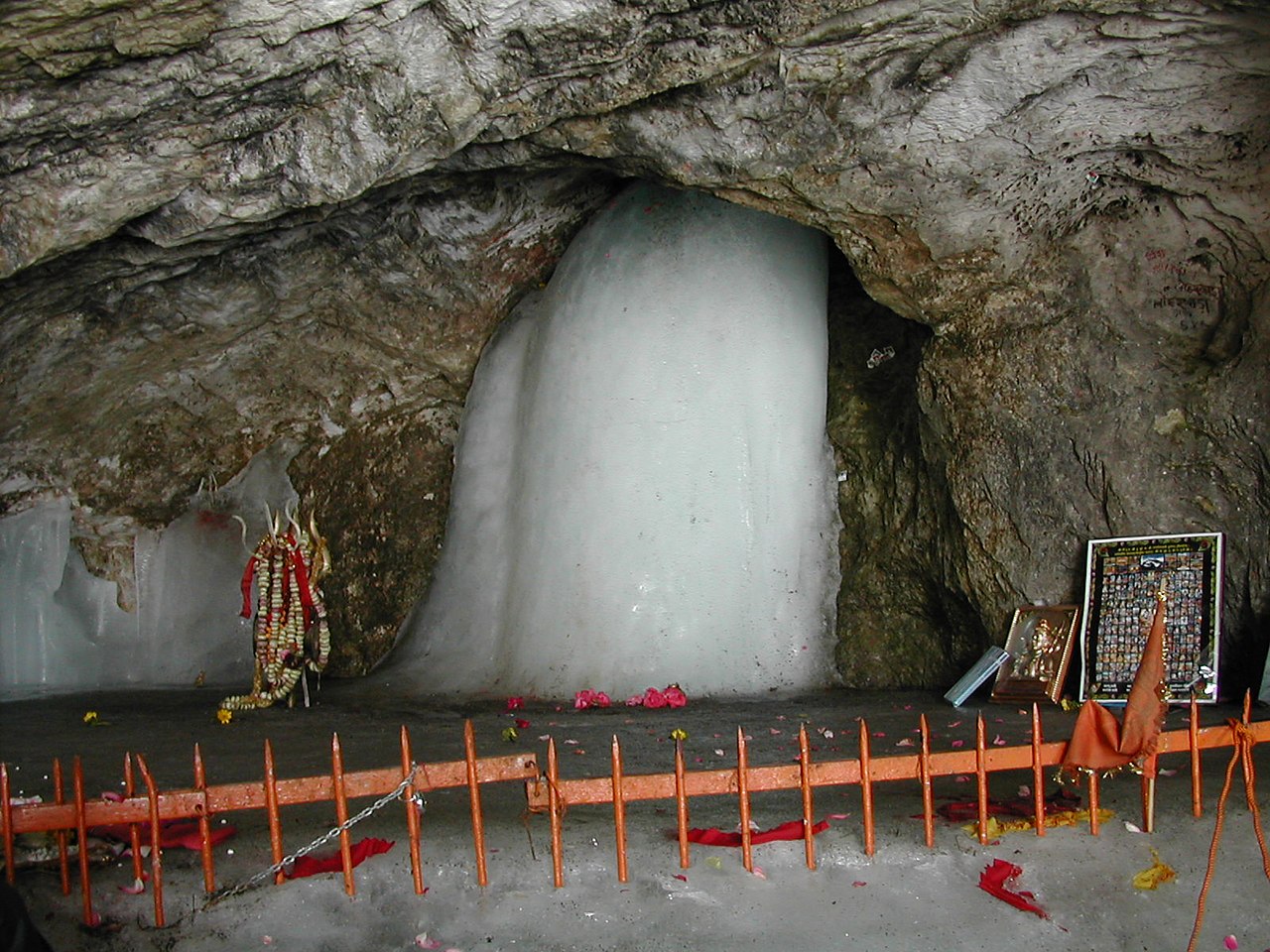
The Amarnath Yatra is one of the most significant Himalayan pilgrimages in India. Every year, devotees travel through the Kashmir Himalayas to the Holy Cave of Shri Amarnathji, where a naturally formed ice stalagmite is revered as the manifestation of Lord Shiva. The shrine lies at approximately 3,888 metres above sea level, so the journey is not simply a religious visit: it is a high-altitude trek that calls for advance registration, medical preparation, suitable clothing and careful attention to official instructions.
This guide explains how to plan the pilgrimage, compare the traditional Pahalgam and shorter Baltal routes, understand registration and health requirements, prepare for the altitude, organise transport and pack sensibly. It also separates confirmed information from the 2026 season from details that must wait for the official 2027 announcement.
Amarnath Yatra 2027: What is confirmed so far?
As of 17 November 2026, the Shri Amarnathji Shrine Board has not published the official 2027 Yatra dates, registration calendar, medical-certificate validity window, permit fees, route quotas or helicopter arrangements. Do not treat dates or fees from an earlier season as confirmed for 2027. The Shrine Board announces the operating schedule and requirements for each season; check the latest notice before making non-refundable bookings.
Planning for 2027? Start with the route, fitness and travel logistics, but wait for the official 2027 notification before applying for a certificate, paying a registration fee or booking a date-specific service.
Where is the Amarnath Cave?
The Holy Cave is in the south Kashmir Himalayas in Jammu and Kashmir, at an altitude of about 3,888 metres (12,756 feet). The Shrine Board describes it as being around 46 km from Pahalgam and 14 km from Baltal by the respective trekking approaches. The cave is reached only during the short annual pilgrimage window, when the administration and Shrine Board open the routes subject to weather and security conditions.
Which route should you choose: Pahalgam or Baltal?
Pilgrims generally approach the cave through one of two authorised axes: the traditional Pahalgam route or the shorter Baltal route. The right choice depends on your fitness, trekking experience, available days and the route assigned on your permit. Both are high-altitude mountain routes, and the shorter option should not be mistaken for an easy walk. Follow the current year’s access-control and movement instructions.
1. Traditional Pahalgam route
The Pahalgam approach begins from the Nunwan base camp near Pahalgam. The route proceeds through Chandanwari, Pissu Top, Sheshnag and Panchtarni before reaching the Holy Cave. The Shrine Board lists the trekking section at around 32 km from Chandanwari to the cave; the precise distance quoted by different official and tourism pages can vary according to the start point and measurement used.
This is the longer, more gradual traditional route and is commonly planned over multiple trekking days, with overnight halts at designated camps. It offers dramatic mountain scenery and the Sheshnag Lake area, but it still involves steep climbs, exposed sections, cold nights and significant altitude gain. Do not improvise overnight stops or leave the route assigned by the authorities.

2. Shorter Baltal route
The Baltal route starts from the Baltal base camp near Sonamarg and proceeds via Domail and Barari to the Holy Cave. The Shrine Board describes the route as approximately 14 km one way. It is much shorter than the Pahalgam approach, but includes steep gradients and can be physically demanding, especially on the return descent. It is not automatically the best choice for older pilgrims, first-time trekkers or anyone with limited fitness.
Some pilgrims plan the Baltal approach as a same-day up-and-down trek, but this should never be treated as a target that everyone must achieve. Weather, crowd management, health, route restrictions and the day’s official instructions determine what is safe. If you are unsure about your capacity, discuss the route with your doctor and choose the more conservative plan.

Pahalgam vs Baltal: Quick comparison
Pahalgam is the longer traditional approach, generally spread across several trekking days and passing through the Sheshnag and Panchtarni camp areas. Baltal is shorter in distance but steeper and more strenuous over a shorter period. Pahalgam usually suits pilgrims who can allocate more days and prefer a staged trek; Baltal may suit experienced, fit trekkers who can manage the sharper ascent and descent. The Shrine Board may impose route-specific quotas, schedules or restrictions, so your permit and the current operational plan take priority over any general comparison.
Amarnath Yatra registration: Step-by-step planning
Registration is compulsory. The process, approved channels, dates, route quotas, fee and document rules are season-specific. For the 2026 Yatra, the Shrine Board’s published advance-registration instructions stated that registration through designated bank branches began on 15 April 2026, was subject to route-wise and date-wise quotas, and used Aadhaar-based biometric eKYC. Those are 2026 rules, not a promise that the 2027 process will be identical.
For the 2027 season, use this preparation checklist and then follow the new notification when it is released:
1. Read the latest Yatra notification and confirm the permitted age range, route options, dates and registration channel. 2. Download the current season’s application form and Compulsory Health Certificate (CHC) format. 3. Check the list of doctors and medical institutions authorised for your State or Union Territory. 4. Obtain the certificate within the validity window stated for that season. 5. Complete registration only through the channel specified by the Shrine Board. 6. Select the route and date carefully; verify all personal details before submission. 7. Save the permit and follow instructions for collecting the RFID card before proceeding to the access-control gate.
The Shrine Board’s published terms identify jksasb.nic.in as its official website and warn that other websites claiming Shrine Board authorisation are not recognised for bookings. To avoid linking to a site whose own terms restrict third-party hyperlinks, enter jksasb.nic.in directly in your browser rather than using an agent’s forwarded payment link. Never share OTPs or make payments to personal accounts.
Compulsory Health Certificate (CHC) and medical eligibility
A valid Compulsory Health Certificate from a doctor or medical institution authorised by the relevant State or Union Territory is required under the Shrine Board’s registration process. Use only the form and authorised-doctor list issued for the season you intend to travel. A certificate from a doctor who is not on the notified list, or one outside the specified issue-date window, may be rejected.
For reference, the 2026 instructions required the CHC to be issued on or after 8 April 2026. The 2026 registration document also stated that pilgrims below 13 years or above 70 years, and women more than six weeks pregnant, would not be registered even if a CHC had been issued. These are published 2026 conditions; check the 2027 notification for the rules that will actually apply to that season.
Do not regard the CHC as a guarantee that the trek will be medically safe for every individual. The cave is at high altitude and the journey can involve cold, exertion and rapid weather changes. Discuss the trip honestly with your treating doctor, especially if you have a history of heart or lung disease, high blood pressure, diabetes, asthma, anaemia, recent surgery or any condition that may affect exercise tolerance. Follow the authorised medical assessment and do not conceal symptoms or medical history.
RFID card and Yatra permit: Do not skip this step
The Shrine Board’s published instructions require registered pilgrims to collect their unique RFID card from the designated centres in Jammu or Kashmir before starting the Yatra. The card must be worn around the neck throughout the pilgrimage. The Board states that a registered pilgrim cannot cross the access-control gate without the RFID card. Carry the original valid photo ID, Yatra permit and any other documents specified in the current season’s instructions.
Helicopter booking: Important seasonal warning
Helicopter services are not guaranteed every year and should never be assumed to be available simply because older websites list operators. For the 2026 Yatra, a Government of Jammu and Kashmir order dated 1 June 2026 declared both the Pahalgam and Baltal axes a No Flying Zone from 1 July 2026 until the end of the Yatra; the Shrine Board consequently announced that helicopter services for pilgrim travel would not be available during that season. The 2027 position is not yet confirmed.
If helicopter services are permitted in a future season, use only the official booking route and operators named in the Shrine Board’s current notice. Its terms state that it has not authorised travel agents to book helicopter tickets or other services on its behalf. Avoid social-media offers, unofficial agents and websites that promise guaranteed tickets.
How to reach the Amarnath Yatra base camps
Srinagar is the principal arrival gateway for most pilgrims. From Srinagar, the Baltal base camp is reached by road via Sonamarg, while the Pahalgam approach goes towards Nunwan near Pahalgam. The Shrine Board’s route information places Baltal roughly 95 km from Srinagar by road and Nunwan roughly 90 km from Srinagar by road; journey times vary with traffic, weather, security arrangements and road restrictions.
Jammu is another major rail and road gateway, but reaching the Kashmir base camps from Jammu takes additional travel time. If arriving by train or flight, avoid planning a same-day connection to the trek. Keep a rest day for travel fatigue, document checks and any required reporting at the base camp. Confirm transport availability and movement restrictions close to departure.
A sample itinerary for the Pahalgam route
The following is a broad planning example, not an official day-wise schedule. Actual camp halts, trek stages, access-control timings and darshan arrangements are set by the authorities for the season.
Day 1 – Arrive in Srinagar: Reach Srinagar, check into your accommodation and rest after the journey. Day 2 – Transfer to Pahalgam/Nunwan: Travel to the base area, complete the required reporting and RFID arrangements, and keep the day light. Day 3 – Begin the trek: Proceed from the authorised starting point towards the designated camp according to the permit and official schedule. Day 4 – Continue towards Panchtarni: Follow the assigned route and camp arrangements; do not rush the ascent. Day 5 – Darshan and return movement: Complete darshan when permitted and follow the officials’ instructions for the return stage. Day 6 – Descend and return towards Pahalgam: Continue to the designated base area. Day 7 – Buffer/departure: Keep this day flexible for weather, road movement or fatigue.
A Baltal itinerary may be shorter in trekking distance, but it should not be compressed to fit a tight flight or train connection. Build in rest, acclimatisation and contingency time whichever route you choose.
Fitness and acclimatisation: Prepare before you go
The Shrine Board advises pilgrims to prepare with regular walking, including a 4–5 km daily walk in the month before the Yatra, and to practise deep-breathing exercises. Treat this as a basic preparation suggestion, not a guarantee of fitness for a high-altitude trek. If you are not accustomed to walking uphill, begin earlier and increase activity gradually after consulting your doctor.
During the Yatra, walk slowly, take regular breaks and do not race other pilgrims. Eat regularly, drink fluids according to your needs and avoid alcohol and smoking. Do not ignore headache, nausea, dizziness, unusual weakness, loss of coordination, confusion or breathlessness at rest. Tell the nearest medical team immediately. If altitude illness is suspected, stop ascending and follow medical advice; descent to a lower altitude may be urgently required.
What to pack for the Amarnath Yatra
Clothing: thermal base layers, warm mid-layers, a windproof and waterproof outer jacket, warm trousers, woollen socks, gloves, a cap and spare dry clothing. The Shrine Board warns that temperatures can fall abruptly, sometimes below 5°C.
Footwear and rain protection: broken-in trekking shoes with good grip and laces, spare socks, raincoat or poncho, umbrella where practical, and waterproof bags for clothes and electronics. The Board specifically advises against slippers because of steep rises and falls on the route.
Documents and essentials: original photo ID, Yatra permit, RFID card, copies of important documents, prescribed medicines, basic personal first-aid items, water bottle, permitted snacks, torch/headlamp, power bank and emergency contact details. Pack light enough to walk safely.
Avoid unnecessary valuables and do not carry banned plastic items. Keep waste with you until it can be disposed of at designated collection points. Respect the mountain environment and all instructions from the administration.
Food, accommodation and facilities on the route
During the official Yatra period, the authorities and approved service providers arrange camps and facilities along the route. Langars may provide free meals at designated points, but availability and operating locations can change. Do not plan your nutrition around a single facility or assume every camp has the same services. Carry permitted snacks and follow the food and waste instructions issued for the season.
Accommodation at base camps and en-route halts may be limited during peak dates. Use authorised booking channels where applicable and confirm what is included before paying. Never camp independently in a restricted or unsafe area, and do not plan an overnight stay at the Holy Cave; the Shrine Board’s advisory warns against this because of the high altitude and harsh, unpredictable weather.
Best time and weather considerations
The Yatra is normally conducted during a short summer window, often spanning parts of July and August, but the exact dates vary each year. Weather in the Kashmir Himalayas can change rapidly even during the official season. Rain, snow, cold winds, low visibility and landslides can interrupt movement. The pilgrimage may be suspended temporarily for weather, security or crowd-management reasons.
Do not choose a date solely because it is a weekend or a festival day. Consider your fitness, crowd tolerance, travel connections and the time needed to complete the route safely. Follow the daily weather and route advisories, and accept that the authorities may delay or stop movement.
Important safety rules during the Yatra
Keep your RFID card visible and wear it as instructed. Carry your permit and original photo ID. Stay on the marked track, obey access-control checks and never take shortcuts. Travel with your group and keep companions within sight. Do not stop at locations marked with warning notices or cross barricades to take photographs.
Avoid overexertion, alcohol and smoking. Do not begin the trek on an empty stomach. Keep warm and dry, protect yourself from rain and cold, and seek help promptly if you feel unwell. Follow police, medical staff, disaster-response teams and Shrine Board personnel even if that means waiting or turning back.
Common planning mistakes to avoid
Do not book travel before checking the official Yatra calendar. Do not assume last year’s CHC date window, age conditions, registration fee or route quotas will apply again. Do not buy helicopter tickets from unauthorised agents. Do not choose Baltal only because it is shorter. Do not underestimate altitude, skip training or arrive without warm and waterproof gear. Most importantly, do not ignore medical symptoms or official route closures.
Official information and further reading
Use government tourism and district-administration pages for general shrine, route and location information. For registration, current CHC formats, authorised doctors, RFID collection, helicopter notices and seasonal instructions, enter the Shrine Board’s official domain jksasb.nic.in directly in your browser and check the latest season-specific notices. The Shrine Board’s own terms caution pilgrims against relying on other websites that claim to be authorised booking channels.
Frequently asked questions
When will the Amarnath Yatra 2027 start? The official 2027 dates have not been announced as of 17 November 2026. Wait for the Shrine Board’s notification before booking date-specific travel.
Which is the easier route, Pahalgam or Baltal? Neither is easy. Pahalgam is longer and usually spread over more days; Baltal is shorter but steeper and more strenuous over a shorter distance. Choose based on medical advice, fitness and the official route plan.
Is registration compulsory for Amarnath Yatra? Yes. Pilgrims must complete the registration and permit process specified by the Shrine Board for that season and collect the required RFID card before starting.
Is a medical certificate required? The Shrine Board’s registration instructions require a Compulsory Health Certificate from an authorised doctor or institution. Use the form, authorised-doctor list and issue-date window published for your travel year.
Can children and senior citizens undertake the Yatra? Eligibility conditions are set by the Shrine Board each year. The 2026 instructions excluded children below 13 and people above 70; confirm the rules for 2027 rather than assuming they will remain unchanged.
Can I book a helicopter for Amarnath Yatra 2027? No 2027 helicopter arrangement has been confirmed as of 17 November 2026. Helicopter services were suspended for the 2026 season under a no-fly order, so check the next season’s official notification.
How many days are needed for the Amarnath Yatra? The Pahalgam route usually requires several trekking days, while Baltal is shorter. Your total trip should also include arrival, registration/RFID arrangements, rest and buffer time for weather or road delays.
Is the Amarnath Yatra safe for first-time trekkers? It is a high-altitude pilgrimage and can be demanding. First-time trekkers should prepare well in advance, obtain medical clearance, choose a suitable route and follow the official schedule without rushing.
Final checklist before you leave
Confirm the official dates and route status. Complete registration through the authorised process. Obtain the season-valid CHC from an authorised doctor. Carry your permit, original photo ID and RFID card. Train gradually and discuss medical concerns with your doctor. Pack proper trekking shoes, warm layers and rain protection. Keep buffer days in your itinerary, follow official advisories and never push through symptoms of altitude illness.
With careful preparation and respect for the mountain environment, the Amarnath Yatra can be a deeply meaningful pilgrimage. Plan around official instructions, not hearsay; choose the route that matches your ability; and remember that reaching safely is more important than completing the journey on a fixed timetable.

